Senior Product Designer
I am a Senior Product Designer with 12 years of experience working in and leading teams of designers and developers across healthcare, finance, and universities. I specialise in untangling complex products into scalable design systems, driving stakeholder alignment through working prototypes, and designing modular, AI-enabled customer experiences. Open my case studies to learn more about me. Note: Key recent enterprise work has been anonymised due to NDAs.

01. Problems I’ve Solved
Design to Development Bottlenecks: Created core mechanics for a multi-component design system and no-code AI frameworks to address design-to-development release bottlenecks at an enterprise financial company.
Rigid Flows and Operational Complexity: Helped shift product strategy away from fixed, rigid flows into a user-driven complexity model, allowing enterprise teams to configure modular workspaces tailored to their operational needs.
Complex Healthcare Consent & Privacy: Transform dense regulatory privacy requirements into intuitive, transparent digital consent patterns (Just-in-Time triggers, granular controls, and centralised Consent Centres) across multi-product health applications at Bupa.
Fragmented and Expensive Brand Asset Creation: Deployed Flexible Visual Systems (FVS) to in browser tools that enabling teams to generate infinite brand-aligned assets while maintaining a recognisable brand across multiple streams. Enabling teams with limited to no design resource or budget to create crafted content for brand comms.
02. Recent Work
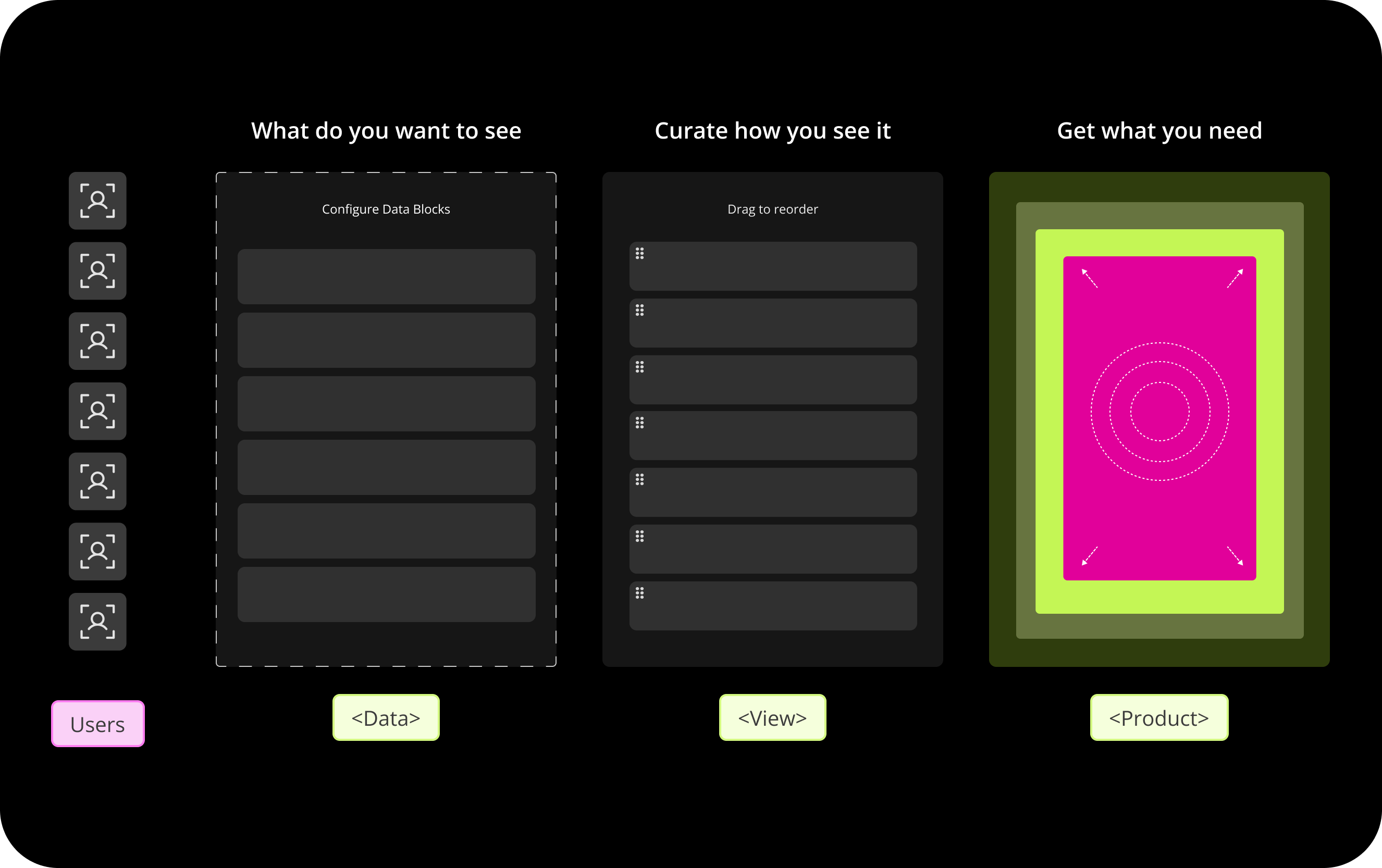
Global Financial Enterprise (NDA Client)
Role: Senior Product Designer
Focus: Multi-Product Design System & AI Platform Design Architecture
Duration: 1.5 years
Shifted product strategy away from fixed, rigid flows into a user-driven complexity model, allowing enterprise teams to configure modular workspaces tailored to their operational needs. Partnered directly with engineering, BA’s and heads of product to evaluate API constraints, rationalising design patterns and design system to inform the company’s 5-year vision.
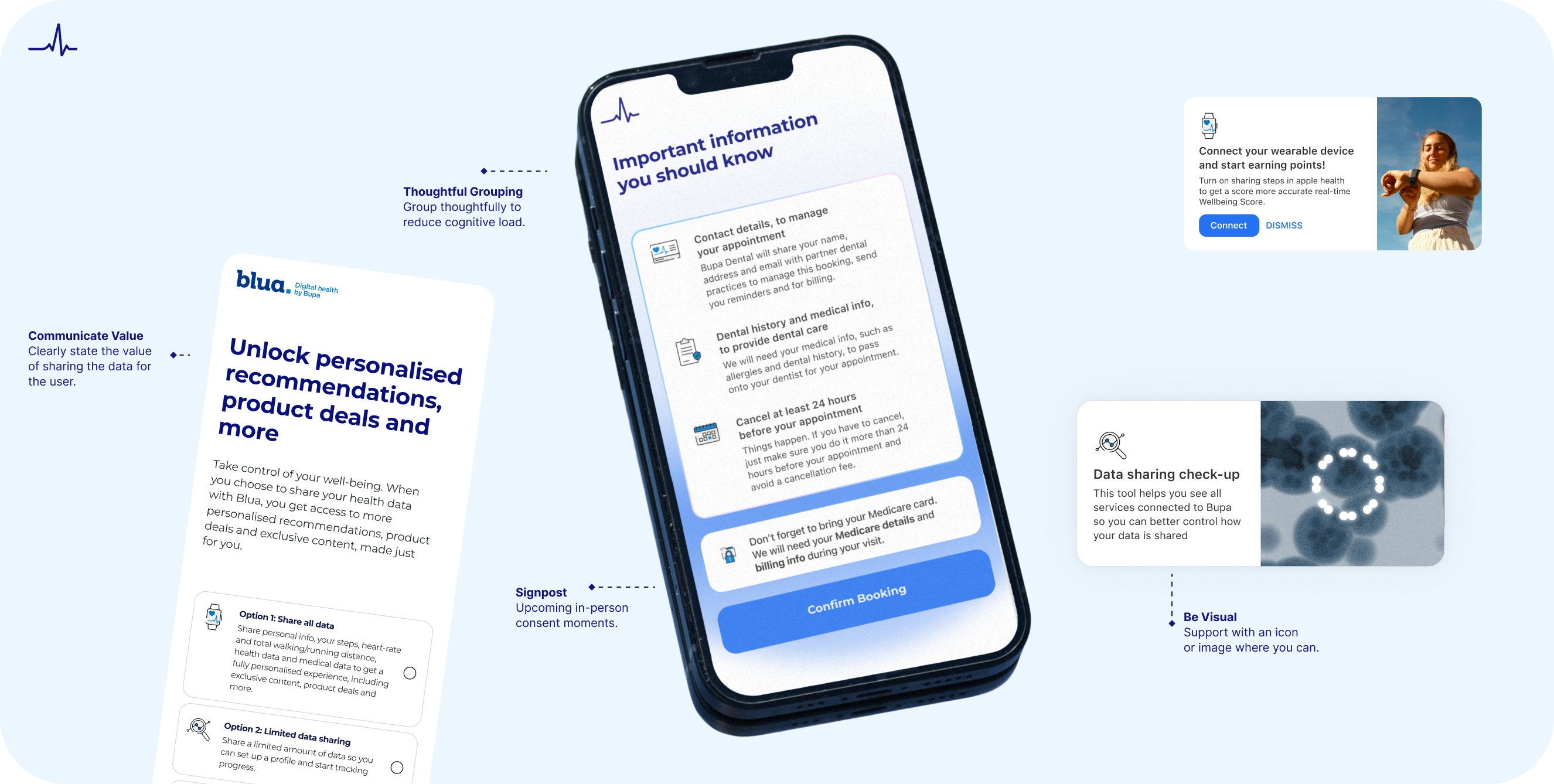
Healthcare Privacy & Consent Framework (Bupa x Craig Walker)
Role: Senior Interaction Designer
Focus: Enterprise Consent Pattern System
Duration: 6 months
Co-designed Bupa’s enterprise-wide digital consent pattern framework across multi-product health applications in collaboration with Craig Walker. Established core interaction principles: Just-in-Time consent triggers, visual permission mechanics, granular data controls, and centralized Consent Centre management. Facilitated cross-functional alignment sessions across legal, risk, privacy, content, and engineering teams to translate strict compliance requirements into production-ready UI components.
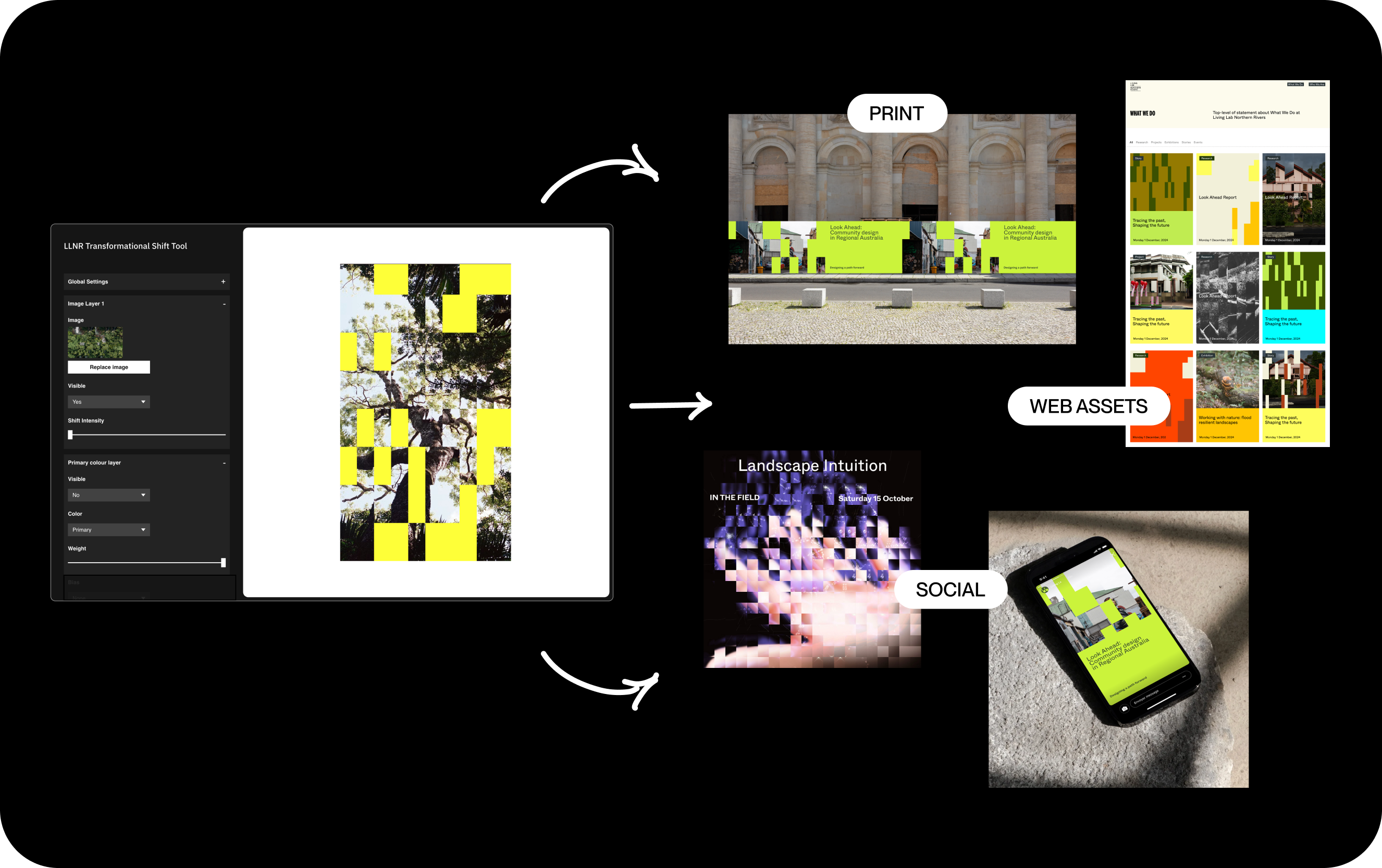
Flexible Visual Systems (Western Sydney University / UTS / Exeter University / Sydney Review of Books / Living Lab Northern Rivers)
Role: Director & Design Lead
Focus: Modular Brand Systems & Asset Generation
Duration: 4 years
Deployed Flexible Visual Systems (FVS) in browser tools to replace rigid, static brand templates with dynamic, rule-based visual systems.
These in-browser tools enable design and publishing teams to output infinite, brand-aligned assets across multiple formats while keeping visual identity completely consistent.
Once the system is built and in practice it can always be extended and can evolve with the brand as things change.
03. What I believe
1. Design thinking drives value in organisations.
2. Design delivers the promise of products to users.
3. Build for flexibility, let users configure what they need.
4. Sketch on canvas, prototype in code to get to interaction way quicker.
5. Reduce the waste Ai brings to design, over the top effects suck.
6. Optionality is the key to working through design problems.
04. How I work with Ai
I run an AI-first design loop between canvas sketching, Figma Make, or Claude Code using a 3-step, component-driven workflow to get to interaction faster while keeping prototypes clean and manageable:
Structure-First Rules: Force the AI to map out the overall layout structure, content hierarchy, and logic rules before generating any UI, reducing hallucinated instances, missing fields, or broken layouts.
Component-Level Building: Prompt the AI to build small, isolated UI pieces so each component can be tested and refined in a sandbox without breaking the rest of the site.
Component Versioning: Save and track changes at the individual component level, making it easy to swap design variations, toggle visual states, and rollback edits while keeping the prototype clean.
05. What people say
“Partners who work as openly, collaboratively and decisively as us are rare. When we asked Pat at Public Websites to translate our new IMAGINE IF® positioning and visual identity to the web, he quickly came back with something that challenged what we thought our website could be. It was scary, it was exciting, and it was truer to ourselves than even we dared imagine. His ability to hold design and functionality together, and move fluidly between static designs and live prototypes to nail the interactivity, made the whole process feel effortless and the results speak for themselves. 100/10. Would work with them again.”
Tim Seddon – Founder & Partner, IMAGINE IF “We were looking for an elegant and creative approach to refreshing our digital presence and enhancing our website’s accessibility. With Public, we felt in extremely safe hands thanks to their integrated approach to design and development. What the team delivered far exceeded our expectations, rebuilding our website around an innovative visual system and search engine that have not only brought new readers to the journal, but also vastly improved our workflow processes. They were consultative at every step of the way and created a product that truly reflects the principles and purpose of our organisation.”
James Jiang – Editor, Sydney Review of Books